
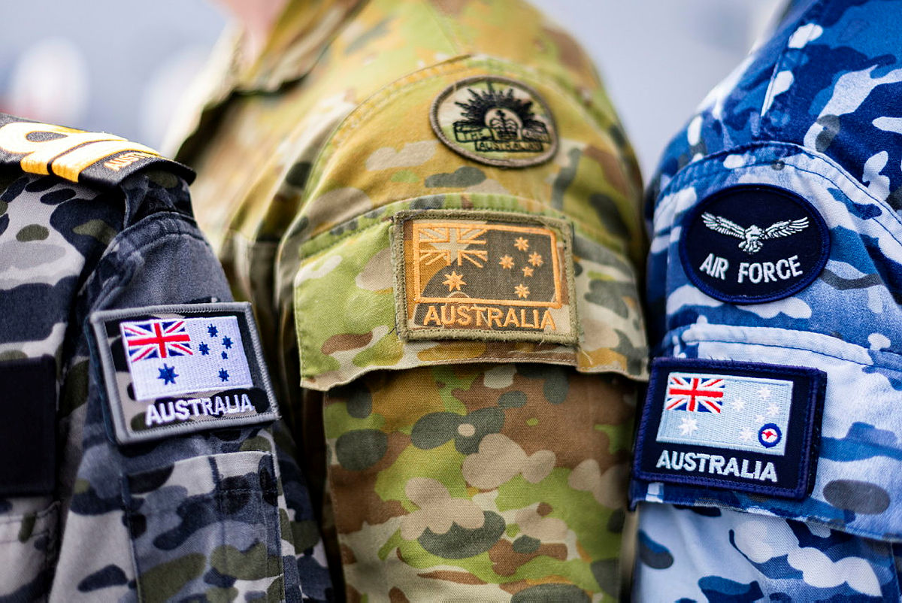
In the Australian Defence Force (ADF), Harmony Week arrives each year with its message of cultural inclusion and respect. Yet this year it feels different. It is easy to already imagine the commentary questioning whether in a time of various geopolitical conflicts, ‘another morning tea’ is in good taste. Can discussions around equity, diversity and inclusion still be had in a time of strategic competition and conflict?
Many assume that when the world becomes more dangerous, conversations about diversity are ‘peacetime luxuries’ and become less important. However, in a world shaped by strategic competition, regional tension, and war, understanding cultures, identities, and perspectives becomes more important for national security, not less. Harmony isn’t a distraction from Defence. It can be a part of how modern nations defend themselves.
Whilst some studies have found that diverse groups are more effective, more innovative, and better equipped to navigate complex challenges, this article reflects on the other crucial ways in which recognition of diversity remains crucial in pursuit of the Defence’s mission and purpose.
Social and Cognitive Resilience
In conflict, competitors frequently seek to exploit pre-existing or dormant divisions within societies. Building cohesive institutions that include all citizens is not a distraction from national security but a defence against efforts to exploit it. As we have seen in recent years, global crises, be they economic downturns or conflict, frequently act as catalysts for increased racism, xenophobia, and discrimination. These events create environments of fear, uncertainty, and scarcity, which are often exploited to scapegoat minority groups, immigrants, and marginalised communities.
The COVID-19 pandemic triggered a global surge in anti-Asian sentiment, including verbal abuse and physical attacks. In Australia, reports of racial discrimination against Asian Australians also rose significantly during the pandemic. We must consider the reality that if Australia finds herself at war with another nation, what impacts might this have on our diaspora populations?
Protecting Australians, including ADF members, requires proactive measures to prevent racism and social division. In uncertain times, national resilience does not require homogeneity but a united force and population.
Working with Our Allies
Australia has rarely been a strategically independent nation, and much of our strength lies in our value as a partner nation and military ally. Coalition warfare is the reality of modern military operations, and success depends upon working effectively with partners from different cultures and backgrounds. Indeed, we still can experience vast cultural differences with our longest and closest military allies. Empathy, respect of difference, and cultural sensitivity are crucial in diplomacy and military partnerships.
In coalition operations and international engagement, language skills and cultural knowledge of our ADF members are operational advantages. A defence force that reflects the diversity of its society is better equipped to understand the wide variety of partners with which it operates.
Regional and Strategic Considerations
Australia’s national security is inseparable from its strategic reality. In the Indo-Pacific region, Australia has long navigated a degree of uncertainty around its regional identity and how it is seen by its neighbours. While geographically part of the region, there is no hiding from our historic perception as a Western-power outpost, rather than a country shaped by incredible generations of migration that have created a modern society of great cultural, ethnic, and linguistic diversity.
Modern Australia reflects a reality of communities whose heritage spans the Indo-Pacific and beyond. The perspectives and experiences that come with our history, recent and early, can help broaden Australia’s perception as a strategic partner and contribute to a more informed engagement with our regional partners. That perspective is not merely cultural, it can also be strategically valuable.
Recruitment and Growth
Like many modern defence forces, the ADF is seeking to grow and sustain its workforce in an increasingly competitive labour market coupled with an era of strategic uncertainty. Many will point out that this reality alone makes it important that the ADF continues to attract capability from across the breadth of Australian society so we may respond with a sizeable force when called upon. Rather, it is not just about who is willing and available, but attracting the best talent from a wider pool of the whole of the Australian population.
Sustainment of Capability: ‘You Can’t Be What You Can’t See’
Representation across ranks encourages the next generation of ADF members to serve and stay serving. When service members see people like themselves contributing and succeeding across the organisation, it reinforces the reality that a long-term career in the ADF is both possible and worthwhile.
Ultimately, military capability depends on the long-term strength and sustainment of the organisation and people within it. Safeguarding against high separation rates; investing in retention of trained, highly skilled, and experienced people over time; and fostering an environment of mentoring and leadership are practical contributions to sustaining capability.
As of 2024, 28% of permanent ADF members identified as coming from a culturally and linguistically diverse (CALD) background. In the coming years, as the Australian population itself grows, younger generations of ADF recruits will continue to include more personnel from various communities across Australia.
Caveat: Inclusion Efforts Matter
Discussions about diversity are often framed in practical terms: that broadening recruitment across communities is necessary to meet recruitment targets. However, attracting people into an organisation means little if we do not ensure a workplace where people feel respected and valued. Inclusive climates help maximise the benefits of workforce diversity and support mission effectiveness. When military members believe in the organisation and its mission, they can contribute to the fullest potential they can offer in defence of the nation.
Conclusion: A False Choice
Ultimately, the profession of arms demands a force to generate and sustain lethal capability in defence of the nation. Achieving that requires cohesive teams, individuals who are committed to the organisation and its mission.
‘Harmony’ is not about magnifying differences, but about recognising differences and bringing them together in the service of something larger than ourselves. Every year, Australians join the military to help protect our nation and way of life. It is important that we also practice the way of life that we preach.
About the author
Sabrina Ting is a junior officer in the Royal Australian Navy, currently working in international engagement. She is a Distinguished Graduate of the Australian Defence Force Academy where she obtained an Honours degree in Politics. Hailing from a proud Asian-Australian background, Sabrina is passionate about driving positive impact through continuous learning and development of herself and others.
The views expressed are the author’s own and do not necessarily represent those of their organisation.
Photo: LSIS David Cox / Department of Defence / Commonwealth of Australia